 पात्रो
 राशिफल
 विदेशी विनिमय
 सुन / चाँदी
 युनिकोड
 मौसम
मौसम
 शेयर बजार
 संवाददाता:- प्रशान्त महासागर

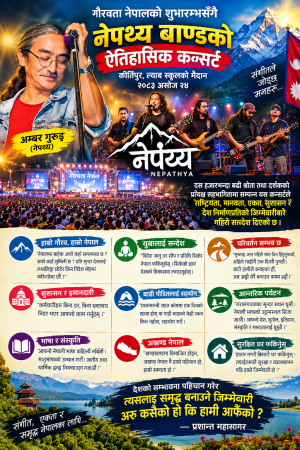

गौरवता नेपालको शुभारम्भसँगै नेपथ्यको ऐतिहासिक कन्सर्ट: राष्ट्रियता, मानवता र युवालाई स्वदेश फर्काउने सन्देश
कीर्तिपुर, २०८३ असोज २४ गते।
कीर्तिपुरस्थित ल्याब स्कुलको मैदानमा गौरवता नेपालको शुभारम्भसँगै नेपथ्य ब्यान्डको सभ्य, भव्य र ऐतिहासिक कन्सर्ट सम्पन्न भयो। दस हजारभन्दा बढी श्रोता तथा दर्शकको प्रत्यक्ष सहभागिता रहेको यस कार्यक्रमले सांगीतिक मनोरञ्जन मात्र प्रदान गरेन, राष्ट्रियता, स्वाभिमान, मानवता, सामाजिक एकता, सुशासन र देश निर्माणप्रतिको जिम्मेवारीबारे पनि महत्त्वपूर्ण सन्देश प्रवाह गर्यो।
कार्यक्रमका क्रममा अम्बर गुरुङले देशको सार्वभौमिकता, प्राकृतिक सम्पदा, सांस्कृतिक पहिचान र युवाको भविष्यसँग जोडिएका विषयलाई भावनात्मक रूपमा प्रस्तुत गर्नुभयो। सत्ताको मोहमा परेर राज्यले मनोमानी गर्न नहुने र शासनसत्तामा रहनेहरूले देश तथा जनताप्रतिको जिम्मेवारी बिर्सन नहुने आशय उहाँका अभिव्यक्तिमा झल्किन्थ्यो।
नेपालको गौरव र विशिष्टतालाई स्मरण गराउँदै उहाँले प्रश्न गर्नुभयो—नेपालमा बाहेक अर्को कहाँ सगरमाथा छ? अर्को कहाँ लुम्बिनी छ? यति सुन्दर प्राकृतिक सम्पदा, ऐतिहासिक धरोहर र अनुपम सांस्कृतिक पहिचान भएको देशलाई लथालिङ्ग छोडेर हामी किन विदेशमोहमा फसिरहेका छौँ? विशेषगरी युवापुस्तालाई लक्षित गर्दै उहाँले विदेश जानै नहुने होइन, विदेशमा गएर ज्ञान, सीप र प्रविधि सिक्नुपर्ने तर सिकेको ज्ञान र सीप आफ्नै देशको विकासमा उपयोग गर्न नेपाल फर्किनुपर्ने सन्देश दिनुभयो।
उहाँले विगत र वर्तमानको यातायात विकासलाई तुलना गर्दै मुस्ताङ जान पहिले पोखराबाट सात दिनसम्म पैदल हिँड्नुपर्ने अवस्था रहेको प्रसङ्ग उठाउनुभयो। अहिले सडक सञ्जालको विकासले यात्रा सहज भएको उदाहरण दिँदै उहाँले देशमा परिवर्तन सम्भव छ भन्ने सन्देश दिनुभयो। बाटो बनेको छ भने त्यो निर्माण गर्ने काम पनि हामीले नै गरेका हौँ र अब देशलाई अझ सुन्दर, समृद्ध तथा व्यवस्थित बनाउने जिम्मेवारी पनि हाम्रै हो भन्ने आशय उहाँको अभिव्यक्तिमा थियो।
सुशासन र भ्रष्टाचारमुक्त प्रशासनको प्रसङ्गमा उहाँले कर्मचारीहरूलाई बिना डर, बिना भ्रष्टाचार र निर्धक्क भएर आफ्नो जिम्मेवारी पूरा गर्न आग्रह गर्नुभयो। सार्वजनिक पदमा बसेका व्यक्तिहरूले इमानदारीपूर्वक काम गर्ने हो भने राज्यप्रतिको जनविश्वास बलियो बन्न सक्छ भन्ने सन्देश यसले दिएको थियो।
यसैबीच, भदौ १० गतेको बाढीबाट प्रभावित नागरिकहरूको पीडालाई स्मरण गर्दै उहाँ भावुक बन्नुभयो। विपद्मा परेका नागरिकलाई सहयोग गर्न आम नेपालीसमक्ष अपिल गर्दै उहाँले आफ्नो क्षमता र गच्छेअनुसार सहयोग गर्न आग्रह गर्नुभयो। प्रधानमन्त्री राहत कोषमा एक दिनको खाजा खर्च होस् वा कतै जाँदा लाग्ने गाडीभाडामध्येको केही रकम, सानो सहयोगले पनि पीडितको जीवनमा ठूलो अर्थ राख्न सक्छ भन्ने मानवीय भावना उहाँको आग्रहमा देखिन्थ्यो। विपद्को घडीमा सरकारको मात्र मुख नताकी नागरिकले पनि आफ्नो तर्फबाट सक्दो सहयोग गर्नुपर्छ भन्ने सन्देश उहाँले दिनुभयो।
आन्तरिक पर्यटन प्रवर्द्धनका विषयमा उहाँले रारालगायत नेपालका सुन्दर पर्यटकीय गन्तव्यहरूको भ्रमण गर्न आग्रह गर्नुभयो। नेपाली भाषाको उद्गमस्थलका रूपमा चिनिने जुम्लाको सिंजालाई स्मरण गर्दै आफ्नै देशको भूगोल, इतिहास, भाषा, संस्कृति र सभ्यतालाई बुझ्न तथा संरक्षण गर्नुपर्नेमा जोड दिनुभयो।
भाषा र संस्कृतिको संरक्षणबारे उहाँको सन्देश पनि उत्तिकै महत्त्वपूर्ण थियो। आफ्नो नेपाली भाषा कहिल्यै नबिर्सिन र सम्भव भएसम्म आफ्नै मातृभाषाको उत्थान तथा विकासमा योगदान दिन उहाँले आग्रह गर्नुभयो। भाषा, धर्म, जाति र संस्कृतिको विविधतालाई विभाजनको आधार नभई नेपालको साझा सम्पत्तिका रूपमा लिनुपर्ने सन्देश यस अभिव्यक्तिमा निहित थियो। जातीय तथा धार्मिक द्वन्द्व निम्त्याउने गतिविधिबाट टाढा रहन र आपसी सद्भाव कायम राख्नुपर्ने उहाँको आग्रहले सामाजिक एकताको आवश्यकतालाई उजागर गर्यो।
खण्डखण्डमा विभाजित होइन, अखण्ड नेपाल नै हाम्रो पहिचान हो; हाम्रो सभ्यता र साझा गौरव हो भन्ने भावनाले कन्सर्टलाई राष्ट्रिय एकताको सन्देशसँग जोडेको थियो।
कार्यक्रमको अन्त्यमा दर्शक तथा श्रोतालाई हतार नगरी बिस्तारै घर फर्किन आग्रह गर्दै उहाँले कार्यक्रम समापन गर्नुभयो। यसले मनोरञ्जनसँगै दर्शकको सुरक्षा र व्यवस्थापनप्रतिको संवेदनशीलतालाई पनि प्रस्तुत गर्यो।
समग्रमा, २०८३ असोज २४ गते कीर्तिपुरको ल्याब स्कुल मैदानमा सम्पन्न नेपथ्य ब्यान्डको यो कन्सर्ट सांगीतिक उत्सवमा मात्र सीमित रहेन। यसले राष्ट्रिय स्वाभिमान, देशप्रेम, युवाको पलायन, स्वदेश निर्माण, सुशासन, मानवीय सहयोग, आन्तरिक पर्यटन, भाषिक तथा सांस्कृतिक संरक्षण र सामाजिक सद्भावका विषयलाई एउटै सूत्रमा जोड्ने प्रयास गर्यो।
दस हजारभन्दा बढी श्रोता तथा दर्शकको सहभागितामा सम्पन्न यस कार्यक्रमले एउटा महत्त्वपूर्ण प्रश्न हामी सबैसामु छोडेको छ—देशको सम्भावना पहिचान गरेर त्यसलाई समृद्ध बनाउने जिम्मेवारी अरू कसैको हो कि हामी आफैँको?
नेपालको सुन्दरता, सम्पदा र पहिचानप्रति गर्व गर्दै त्यसको संरक्षण र विकासमा योगदान दिनु नै यस कार्यक्रमबाट ग्रहण गर्न सकिने मूल सन्देश हो। र आफ्ना साथीहरू हुन त को कहाँ छन ? थाहा त छैन तर जहाँ भए पनि खुशी हुनु है भन्नुभयो ।
— प्रशान्त महासागर
Nepathya’s Historic Concert Marks the Launch of ‘Gauravata Nepal’: A Message of Nationalism, Humanity, and Returning Home
Kirtipur, Ashwin 24, 2083.
A dignified, spectacular, and historic concert by the band Nepathya took place at the Lab School grounds in Kirtipur, marking the launch of the ‘Gauravata Nepal’ initiative. Attended by over ten thousand spectators, the event offered more than just musical entertainment; it conveyed vital messages regarding nationalism, self-respect, humanity, social unity, good governance, and the responsibility of nation-building.
During the program, Ambar Gurung emotionally addressed themes concerning the nation's sovereignty, natural heritage, cultural identity, and the future of its youth. His remarks reflected the sentiment that the state must not act arbitrarily out of a lust for power, and that those in authority must not forget their responsibilities toward the country and its people.
Highlighting Nepal’s pride and uniqueness, he asked: "Where else but Nepal is there a Mount Everest? Where else is there a Lumbini? Why are we succumbing to the allure of foreign lands while leaving a country blessed with such beautiful natural wealth, historical heritage, and unique cultural identity in disarray?" Addressing the younger generation specifically, he conveyed that while going abroad is not inherently wrong—and one should indeed acquire knowledge, skills, and technology there—it is crucial to return to Nepal to utilize that expertise for the country's development.
Comparing past and present transportation infrastructure, he recalled how, in the past, one had to walk for seven days from Pokhara just to reach Mustang. Citing the development of the road network—which has made travel easier—as an example, he conveyed the message that change is indeed possible in the country. His remarks implied that since we were the ones who built these roads, the responsibility of making the nation even more beautiful, prosperous, and well-organized also rests with us.
Addressing the issues of good governance and a corruption-free administration, he urged civil servants to discharge their duties fearlessly, honestly, and without engaging in corruption. His message underscored the idea that if public officials work with integrity, public trust in the state can be strengthened.
Meanwhile, he became emotional while reflecting on the suffering of citizens affected by the floods of Bhadra 10. Appealing to the general public to assist those struck by the disaster, he asked everyone to contribute according to their means and capacity. His plea reflected a humanitarian spirit, suggesting that even a small contribution—whether it be the cost of a single day's snack or a portion of travel fare—could make a significant difference in the lives of the victims. He conveyed the message that in times of disaster, citizens should not rely solely on the government but should also extend whatever help they can.
Regarding the promotion of domestic tourism, he encouraged people to visit Nepal's beautiful tourist destinations, including Rara. Highlighting Sinja in Jumla—known as the birthplace of the Nepali language—he emphasized the importance of understanding and preserving the country's own geography, history, language, culture, and civilization.
His message concerning the preservation of language and culture was equally significant. He urged everyone never to forget the Nepali language and, whenever possible, to contribute to the upliftment and development of their mother tongue. His message emphasized that the diversity of language, religion, ethnicity, and culture should be viewed as Nepal's shared heritage rather than a basis for division. His call to avoid activities that incite ethnic or religious conflict and to maintain mutual harmony highlighted the necessity of social unity.
The concert was imbued with the sentiment that an undivided Nepal—rather than a fragmented one—defines our identity, civilization, and shared pride, thereby linking the event to a message of national unity.
He concluded the program by asking the audience to return home safely and without haste, demonstrating a concern for their safety and crowd management alongside the entertainment.
Overall, the concert by the band Nepathya, held on Ashwin 24, 2083, at the Lab School grounds in Kirtipur, transcended the boundaries of a mere musical celebration. It sought to weave together themes such as national pride, patriotism, youth migration, nation-building, good governance, humanitarian aid, domestic tourism, the preservation of language and culture, and social harmony.
Attended by over ten thousand people, the event left us all with a crucial question: is the responsibility of recognizing the country's potential and fostering its prosperity ours, or does it belong to someone else?
The core message to be drawn from this event is the importance of taking pride in Nepal's beauty, heritage, and identity, and contributing to their preservation and development. And regarding my friends—well, I don't know where they all are, but wherever they may be, I hope they are happy.
— Pacific Ocean